Telangana Advisor Flags Engineering Compromises in Kaleshwaram Project
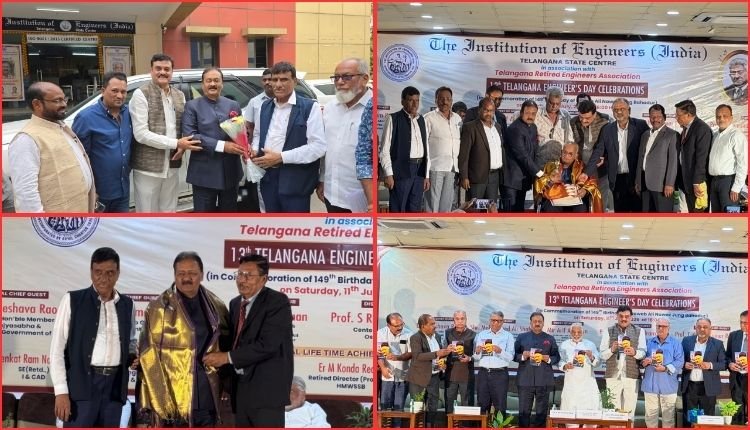
Hyderabad: Speaking at Telangana Engineers' Day celebrations, Telangana Government Advisor Mohammed Ali Shabbir has leveled fresh criticism at the Kaleshwaram irrigation project, characterizing it as a cautionary tale of political decision-making superseding technical judgment.
Addressing an audience at Visvesvaraya Bhavan in Khairatabad on Saturday, Shabbir Ali asserted that the previous BRS administration had jeopardized over ₹1 lakh crore in public funds by disregarding professional guidance, engineering protocols, and fiscal responsibility.
Historical Contrast
The event, jointly organized by the Institution of Engineers and the Telangana Retired Engineers Association, marked the birth anniversary of Nawab Ali Nawaz Jung Bahadur. Shabbir Ali used the occasion to underscore how the historical figure exemplified the principles of professional integrity and scientific methodology.
Nawab Ali Nawaz Jung, he noted, had spearheaded transformative irrigation and infrastructure initiatives across the region, overseeing the development of Osman Sagar, Himayat Sagar, and Nizam Sagar. His contributions extended beyond water management to urban planning, including the conceptualization of Osmania University and Osmania General Hospital. According to Shabbir Ali, these enduring legacies owed their success to rigorous scientific analysis, meticulous planning, and adherence to professional standards.
Structural Concerns Emerge
In stark contrast, Shabbir Ali contended that the Kaleshwaram project has encountered substantial difficulties merely two years following its commissioning. He cited reports of pier subsidence at Medigadda barrage alongside structural vulnerabilities identified at both Annaram and Sundilla barrages.
Shabbir Ali alleged that former Chief Minister K. Chandrashekar Rao had fundamentally altered the project's design in alignment with political considerations, marginalizing the input of qualified engineers. The government, he claimed, had abandoned the originally conceived Pranahita-Chevella proposal at Tummidihatti despite having already invested considerably in associated canal infrastructure and construction work.
A panel comprising retired engineers had explicitly cautioned against relocating the project to Medigadda, according to Shabbir Ali. Yet these professional recommendations were disregarded by the administration.
Process Deficiencies
Shabbir Ali further alleged procedural irregularities in project execution. Contracts, he stated, were awarded prior to the completion of technical evaluations and regulatory clearances. Proper protocol, he emphasized, demands that technical approvals precede construction commencement rather than follow contractual agreements.
Findings from the National Dam Safety Authority have raised concerns regarding multiple aspects of the Medigadda installation, including planning, design, construction standards, and protocols for ongoing operation and upkeep. Foundation and structural deficiencies at Medigadda, Annaram, and Sundilla have necessitated subsequent rehabilitation interventions, Shabbir Ali noted.
He questioned the operational safety status of these barrages and expressed criticism toward former Irrigation Minister T. Harish Rao and K. Chandrashekar Rao for their continued defense of the project despite mounting evidence of problems.
Call for Professional Standards
Shabbir Ali concluded by urging the engineering community to prioritize professional ethics and withstand political pressures. He appealed to governmental bodies to ensure meaningful engineer participation throughout infrastructure project lifecycles and to earnestly implement technical recommendations provided by qualified professionals.
Compare options