Redefining Wellness Without Shame: How 180 Method Studio Is Transforming Fitness and Mental Health in India
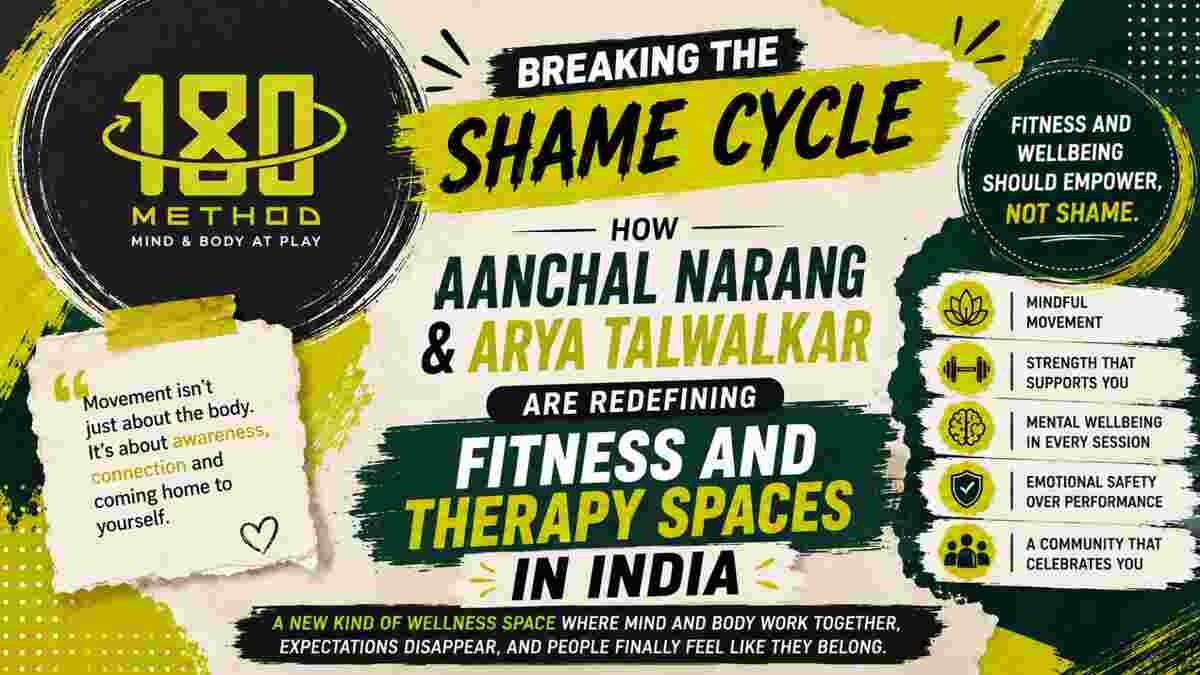
The Problem With India's Wellness Industry
Wellness in India has long been framed around self-rejection. The industry has conditioned people to believe they must first despise themselves—be thinner, calmer, more productive, more disciplined—before they can improve. Over time, fitness and mental health spaces have evolved into arenas of pressure, guilt, comparison, and performance metrics rather than genuine wellbeing.
The irony is stark: as wellness culture has expanded, so has burnout and emotional exhaustion. People exercise more frequently, consume endless self-help content, and pursue constant self-improvement, yet many remain disconnected from their own bodies and minds.
This contradiction is what Aanchal Narang and Arya Talwalkar set out to address through their venture, 180 Method Studio.
A Different Vision for Wellness Spaces
The co-founders are constructing something fundamentally different from conventional fitness environments. Aanchal, who also founded and leads Another Light Counselling, brings expertise in queer-affirmative and trauma-informed therapeutic practice. Together, she and Arya are designing a space where movement, emotional health, and belonging can coexist without shame, fear, or impossible expectations.
Their core conviction is straightforward: people flourish in environments where they feel secure, valued, and truly understood.
The Shame Architecture of Modern Wellness
Contemporary wellness culture rests on a hidden but pervasive belief: "You must hate yourself sufficiently to transform yourself."
This manifests differently across sectors. In fitness, it appears as extreme transformation narratives, punishment-based training, food-related guilt, impossible body standards, and the celebration of overwork. Mental health spaces display it through pressure to "heal quickly," productivity as a measure of self-worth, emotional perfectionism, and the constant expectation to be "better."
The 180 Method approach rejects this framework. The studio maintains discipline and ambition while stripping away humiliation, dread, and competitive comparison.
The Science Behind Mind-Body Integration
Physical and mental health have historically operated as separate domains—therapy addressed thoughts and feelings, fitness addressed only the body. Contemporary research and personal experience demonstrate how inseparable they truly are.
The connections are numerous: stress alters posture, sleep, and vitality; breathing patterns regulate anxiety and emotional responses; sleep quality shapes mood, concentration, and nervous system function; movement influences self-assurance, thinking capacity, and emotional states.
This understanding has made mind-body wellness spaces increasingly essential globally.
At 180 Method Studio, this integration occurs organically. Participants engage in conscious movement, learn how their bodies express stress, observe their breathing, and develop a stronger connection with their physical selves. The emphasis extends beyond appearance or achievement—it prioritizes long-term sustainability.
As Aanchal articulates: "Mental wellbeing is not only about thoughts or conversations. It is also about how connected and regulated we feel in our body."
Arya complements this perspective: "Sometimes the most powerful shift happens when people stop forcing their body and start listening to it."
This reframing transforms movement from a performative obligation into a restorative practice.
Building Emotional Safety Into Fitness Culture
Traditional fitness settings frequently alienate people, particularly those from queer communities or individuals managing body image challenges. Pervasive comparison, inflexible beauty ideals, and aggressive competition foster environments where people feel scrutinized rather than supported.
180 Method Studio was deliberately constructed to counter this dynamic. It welcomes individuals across all identities, body types, and backgrounds without judgment. This inclusivity functions as the foundation of the space's emotional experience, not merely a marketing angle.
Aanchal sees emotional safety as integral to wellbeing outcomes: "When people feel accepted, their relationship with movement and self-care becomes healthier and more sustainable."
Arya reinforces this: "The moment people feel like they belong, fitness stops feeling intimidating and starts becoming enjoyable."
Reimagining What Strength Means
A pervasive misconception frames strength as necessarily demanding, harsh, or draining. Contemporary wellbeing actually demands a more nuanced conception of strength.
Genuine strength can mean pausing before exhaustion, resting guilt-free, establishing limits, seeking help, maintaining consistency rather than extremes, and collaborating with your body instead of battling it.
Today's wellness seekers want more than physical change. They seek equilibrium, durability, mental clarity, and welcoming communities—precisely what shame-free wellness spaces provide.
A Larger Cultural Shift
What Aanchal Narang and Arya Talwalkar are constructing transcends a fitness studio or therapeutic partnership. It signals a broader transformation in how India approaches wellness—one grounded in acceptance, integration, and genuine care rather than shame and performance.
Compare options