Mundra Terminal Set to Deliver $9.2 Billion Economic Boost to India by 2035
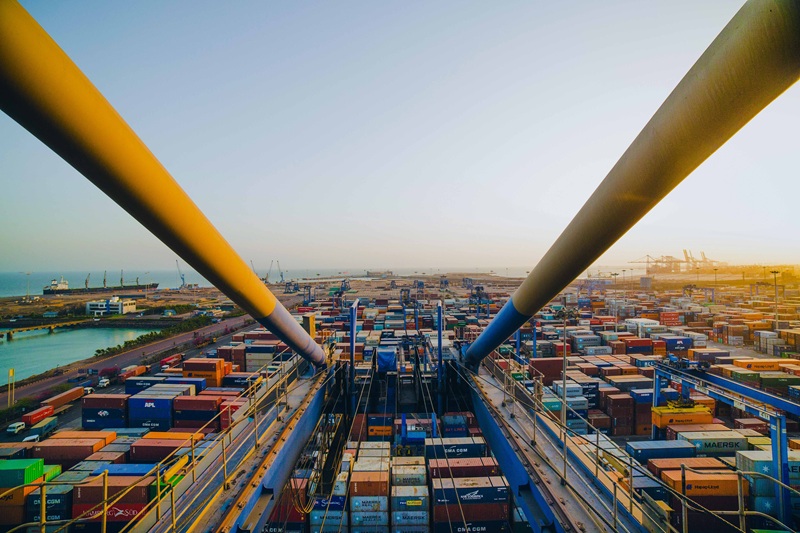
Fresh research underscores the expanding significance of the Mundra International Container Terminal (MICT) as a pivotal trade gateway that is generating substantial economic returns and fostering widespread development opportunities across India.
Since its launch in 2003 as the nation's first greenfield container terminal at a non-major port, MICT has evolved into a cornerstone of containerised trade infrastructure. Over two decades of operations, the facility has processed more than 19 million containers, with 1.4 million TEU handled in 2024 alone. The terminal now serves as a vital link for key industrial and consumer markets spanning western and northern India.
Today, MICT maintains connections with 73 international ports and accommodates ultra-large container vessels reaching 19,200 TEU capacity. A comprehensive multimodal rail network spanning Gujarat, Rajasthan, Haryana, Punjab and Delhi has significantly enhanced supply chain performance, enabling Indian exporters to strengthen their competitive position in international markets.
An independent analysis conducted by Oxford Economics quantifies MICT's substantial footprint across India's trade sector and regional development:
Immediate Economic Contributions
In 2024, MICT generated $128.9 million in GDP contribution to India, with $118.8 million accruing to Gujarat's economy. The terminal's operations sustained approximately 1,880 employment positions nationwide, comprising 1,240 roles within Gujarat. These jobs span logistics, transportation, manufacturing, retail and services sectors.
Long-Term Growth Projections
Looking ahead, enhanced maritime connectivity via MICT is projected to catalyse $6.4 billion in additional export value and deliver a $9.2 billion GDP impact across India by 2035.
Workforce Diversity and Inclusion
The terminal is demonstrating notable progress in workforce representation. Women comprise nearly 25 percent of positions associated with MICT operations, reflecting expanded participation across the broader logistics ecosystem. Additionally, approximately 10 percent of employees are under 25 years old, signalling growing prospects for younger workers entering a traditionally male-dominated industry. DP World remains committed to advancing diversity and representation throughout its operational footprint.
Community Development Initiatives
Beyond port operations, DP World has invested in localised programmes addressing education, healthcare and financial support. Through the 'Kal Ki Kaksha' digital learning initiative, developed alongside Pratham Infotech Foundation, the company facilitated technology-enabled education for 3,643 students across 17 schools during 2024, with substantial female participation.
The Pragati Scholarship Programme, implemented with Yuva Unstoppable, provides financial support to 237 girls, helping reduce educational dropout rates. Healthcare delivery has expanded through two Mobile Medical Vans operated in partnership with the Wockhardt Foundation, providing complimentary medical services to approximately 20,000 individuals annually, emphasising preventive care and community health awareness.
Regional Business Growth
Local enterprises have capitalised on improved connectivity. Aten Papers and Foam Limited, a Gujarat-based recycling company, has leveraged enhanced port and inland rail infrastructure to source recyclable materials from international markets more effectively. The company's director noted that improved trade infrastructure has enabled sustainable expansion of recycling-led manufacturing while creating stable employment in surrounding communities.
Hemant Kumar Ruia, Country Manager for DP World's Subcontinent operations, stated that when infrastructure is developed with scale, efficiency and connectivity as priorities, it becomes a transformative force for both economic expansion and social advancement. He emphasised that MICT is facilitating faster, more dependable trade while generating superior employment prospects and expanding business opportunities.
The Oxford Economics assessment concludes that MICT's influence transcends conventional port functions. Through facilitation of trade flows, job creation, export support and community investment, the terminal is emerging as a strategic catalyst for sustainable economic advancement across Gujarat and India more broadly.
DP World's integrated network of ports, terminals and multimodal logistics infrastructure continues strengthening linkages between India's interior regions and coastal trade hubs, enabling businesses to access global markets with enhanced efficiency.
Compare options